Ignite Your Impact: Unlocking Motivation for Peak Productivity
Motivation is the invisible force that nudges us forward, the initial flicker that precedes every great endeavor. It’s the internal compass pointing towards our aspirations, whether they’re grand career milestones or simply clearing our to-do list for the day. While often perceived as a spontaneous burst of energy, true motivation is a delicate interplay of purpose, passion, and belief in one’s ability to achieve. Understanding what truly ignites this spark within you—be it the pursuit of knowledge, the desire to help others, or the simple satisfaction of a task well done—is the crucial first step in any journey towards sustained output. It’s about finding that deep-seated ‘why’ that makes the effort worthwhile.
Once that motivational spark is lit, productivity becomes the deliberate act of channeling that energy into meaningful action. It’s not merely about staying busy, but rather about strategically allocating your time and effort to tasks that genuinely move you closer to your goals. Effective productivity isn’t born from endless hours, but from focused attention, efficient systems, and the discipline to minimize distractions. When motivation and productivity align, they create a powerful feedback loop: successful completion of tasks fuels further motivation, building momentum that propels you towards even greater accomplishments, transforming ambition into tangible results and making every effort count.
Ever wonder why some employees are self-starters, consistently exceeding expectations, while others seem disengaged, just going through the motions? Understanding the science behind work motivation theory can unlock the secrets to boosting performance across your entire team. It's about more than just perks; it's about tapping into the core drivers that make people want to excel.
At a glance:
- Discover the key work motivation theories and how they apply to real-world scenarios.
- Learn how to tailor motivational strategies to individual employee needs and preferences.
- Identify common pitfalls in implementing motivational programs and how to avoid them.
- Gain practical tools to immediately improve team engagement and productivity.
The Foundation: Understanding What Drives Us
Explore motivation at work to gain a better understanding of the theoretical landscape. Work motivation theory boils down to understanding the "why" behind an employee's actions. It's not a one-size-fits-all solution, but a spectrum of approaches that consider individual needs, cognitive processes, and environmental factors. These include content theories, which focus on what motivates us (needs, rewards), and process theories, which look at how motivation occurs (expectations, perceptions).
Key Work Motivation Theories for Modern Teams
Several prominent theories have shaped our understanding of work motivation. Let's look at some relevant theories.
Maslow's Hierarchy of Needs: Meeting Basic Needs First
Maslow's theory is a classic. It suggests individuals are driven to fulfill a hierarchy of needs, starting with physiological (food, shelter) and safety needs, then progressing to belonging, esteem, and finally, self-actualization.
- Practical Application: Ensure employees have a safe work environment, fair compensation, and job security before focusing on aspirational goals. A team member worried about making rent isn't going to be focused on innovative solutions.
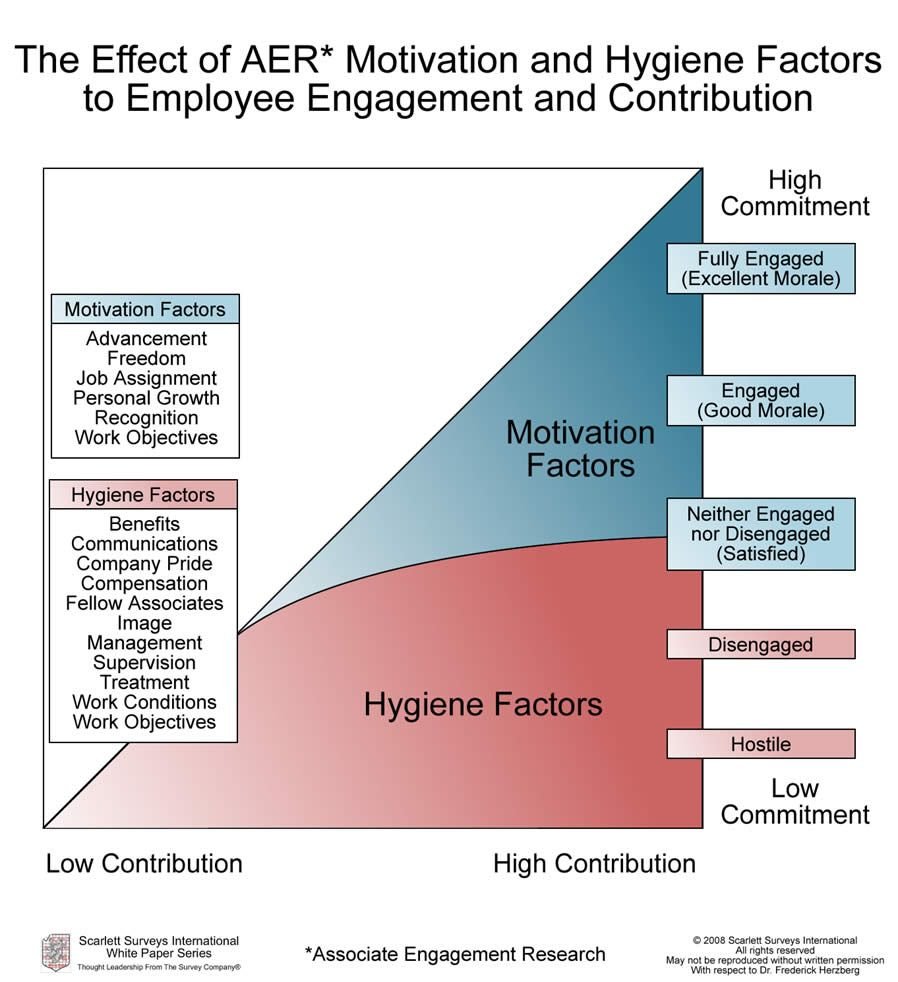
Herzberg's Motivation-Hygiene Theory: Addressing Dissatisfaction & Igniting Passion
Herzberg identified two key sets of factors: "hygiene" factors (like salary, working conditions, company policies) that prevent dissatisfaction, and "motivators" (like achievement, recognition, responsibility) that drive satisfaction and performance.
- Practical Application: Fixing poor working conditions (hygiene factors) won't necessarily motivate someone to work harder, but neglecting them will definitely de-motivate. Focus on addressing hygiene factors first and then layering in motivators. For example, a comfortable work environment would be having functioning equipment.
Vroom's Expectancy Theory: Linking Effort to Outcomes
Vroom's theory suggests that motivation is a product of expectancy (belief that effort leads to performance), instrumentality (belief that performance leads to a reward), and valence (the value placed on the reward).
- Practical Application: Clearly communicate performance expectations, link performance to desired rewards (promotions, bonuses, recognition), and understand what each employee values. A "one-size-fits-all" reward system will likely be ineffective. For example, a team member is more likely to exceed sales targets if the bonus is a trip to Hawaii (if that's what they value!) rather than a generic gift card.
Reinforcement Theory: Shaping Behavior Through Consequences
This theory is based on the idea that behavior is shaped by its consequences. Rewarded behaviors are likely to be repeated, while punished behaviors are less likely.
- Practical Application: Use positive reinforcement (praise, bonuses, promotions) to encourage desired behaviors. Constructive feedback and consequences are equally important. If you are seeking to make the team more punctual, provide incentives for arriving on time.
McClelland's Three Needs Theory: Tailoring to Individual Drivers
McClelland proposed that individuals are primarily driven by one of three needs: achievement, affiliation, or power.
- Practical Application: Assign tasks and responsibilities based on employees' dominant needs. High achievers thrive with challenging projects and clear goals. Those motivated by affiliation excel in collaborative roles. Individuals with a strong need for power may be well-suited for leadership positions. For example, assign a sales representative with a high need for achievement to a new, challenging territory with high commission potential.
Self-Determination Theory (SDT): Fostering Intrinsic Motivation
SDT emphasizes the importance of intrinsic motivation – doing things because they are inherently interesting or enjoyable. It highlights three key needs: autonomy (sense of control), competence (feeling capable), and relatedness (connection with others).
- Practical Application: Provide employees with autonomy in how they approach their work, opportunities to develop their skills, and a sense of belonging within the team. Micromanaging erodes autonomy, while providing training and mentorship fosters competence. Encourage team-building activities to strengthen relatedness.
Adam's Equity Theory
Adam's Equity Theory proposes that employees are motivated when they believe that the ratio of their inputs (effort, skills) to outputs (pay, recognition) is fair compared to others.
- Practical Application: Ensure pay, benefits, and recognition are distributed fairly. Consider implementing transparent compensation policies and regularly communicate how performance is evaluated. Address feelings of inequity promptly and fairly.
Goal-Setting Theory (Locke and Latham)
Goal-Setting Theory states that specific and challenging goals can lead to higher levels of performance than vague or easily attainable goals.
- Practical Application: Collaborate with employees to set SMART (Specific, Measurable, Achievable, Relevant, Time-Bound) goals. Provide regular feedback on progress and celebrate successes. For example, instead of "Improve customer satisfaction," set a goal to "Increase customer satisfaction scores by 10% in the next quarter."
Self-Efficacy Theory (Bandura)
Self-Efficacy Theory proposes that an individual's belief in their ability to succeed in a specific task or situation influences their motivation and performance.
- Practical Application: Provide employees with training and development opportunities to build their skills and confidence. Offer positive feedback and encouragement, and create opportunities for them to experience early successes. Break down large tasks into smaller, more manageable steps to build self-efficacy.
McGregor's Theory X and Theory Y
McGregor's Theory X and Theory Y represent two contrasting management styles. Theory X assumes employees are lazy and need to be closely supervised, while Theory Y assumes employees are self-motivated and seek responsibility.
- Practical Application: Adopt a Theory Y management style to empower employees, foster autonomy, and encourage participation in decision-making. Provide opportunities for personal and professional development. Avoid micromanagement and focus on creating a supportive and trusting work environment.
Building Your Motivation Playbook: Practical Steps
Okay, theory is great, but how do you actually use this stuff? Here's a step-by-step playbook:
- Assess Your Team's Needs: Conduct surveys, hold individual meetings, and observe team dynamics to understand what truly motivates your employees. What are their values, goals, and concerns?
- Tailor Your Approach: Based on your assessment, develop individualized motivational strategies. Some employees might respond well to public recognition, while others prefer private praise or opportunities for professional development.
- Implement the Strategies: Put your plans into action. This might involve adjusting compensation structures, redesigning jobs, providing more autonomy, or investing in training programs.
- Monitor and Evaluate: Regularly track key performance indicators (KPIs) and gather feedback from employees to assess the effectiveness of your motivational strategies. Be prepared to adjust your approach as needed.
Example Scenario:
A software development team is struggling with low morale and missed deadlines. An assessment reveals that developers feel micromanaged (lack of autonomy) and lack opportunities to learn new technologies (competence). The manager implements a plan to give developers more control over their projects, provides access to online training courses, and encourages knowledge sharing within the team. As a result, morale improves, deadlines are met more consistently, and the team starts producing higher-quality code.
Common Pitfalls & How to Avoid Them
- Ignoring Individual Differences: Assuming everyone is motivated by the same things is a recipe for failure. Spend the time to understand individual needs and preferences.
- Focusing Solely on Extrinsic Rewards: While bonuses and raises can be effective, they shouldn't be the only motivators. Intrinsic motivation is often more powerful in the long run.
- Lack of Transparency: Employees need to understand how performance is evaluated and how rewards are distributed. Lack of transparency breeds distrust and undermines motivation.
- Inconsistent Application: Applying motivational strategies inconsistently can create perceptions of unfairness and damage morale. Ensure that your approach is equitable and consistent across the team.
Quick Answers to Common Questions
- Q: Which motivation theory is "best"?
- A: There's no single "best" theory. The effectiveness of a theory depends on the individual, the context, and the specific goals. A blended approach, drawing from multiple theories, is often most effective.
- Q: How can I motivate someone who seems completely unmotivated?
- A: Start by trying to understand the underlying reasons for their lack of motivation. Are they struggling with a lack of skills, a lack of autonomy, or a lack of connection to the team? Address these underlying issues and then try to identify motivators that resonate with them.
- Q: What's the ROI of investing in employee motivation?
- A: Highly motivated employees are more productive, more engaged, and less likely to leave. This translates into lower costs, higher revenues, and a stronger competitive advantage. Studies consistently show a strong correlation between employee engagement and business outcomes.
Taking Action: A Decision Tree
Here's a simple decision tree to help you get started:
- Start: Identify a performance or engagement issue within your team.
- Assess: What factors might be contributing to the problem? (e.g., lack of skills, lack of autonomy, unfair compensation).
- Analyze: Which motivation theories are most relevant to the situation? (Consider Maslow, Herzberg, Vroom, SDT, etc.).
- Plan: Develop specific, measurable, achievable, relevant, and time-bound (SMART) goals for improving motivation.
- Implement: Put your motivational strategies into action.
- Evaluate: Track progress toward your goals and gather feedback from employees. Are your strategies working?
- Adjust: Refine your approach as needed based on your evaluation.
- Repeat: Continue to monitor and adapt your motivational strategies to keep your team engaged and performing at its best.
Understanding and applying work motivation theory isn't a magic bullet, but it's an essential ingredient for building a high-performing, engaged, and motivated team.